Jacob Boos
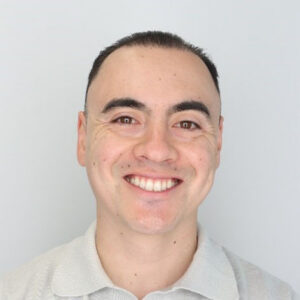 Postdoctoral Scientist
Research Focus
- Understanding epigenetic mechanisms of paraquat-induced neuroinflammation
- The influence of paraquat on proteinopathies in neurodegenerative diseases
Orchid
Isha Mhatre Winters
 Postdoctoral Research Associate
Isha’s research explores the impact of environmental exposures and their interactions with genetic risk to drive Alzheimer’s disease and related dementias. This work focuses on biomarker discovery using multi-omic approaches and ultrasensitive assays, with cross-species validation in human cohorts, non-human primates, and transgenic mice to reveal conserved mechanisms of pathology. The primary goal is to translate these findings into precision medicine strategies for early detection, prevention, and intervention in Alzheimer’s disease.
Research Focus
- Novel preclinical biomarker discovery in Alzheimer’s Disease
- Cross-species comparative neuropathology and cognition
- Sex differences to understand risk and resilience in Alzheimer’s disease
- Role of exposome in neurological diseases
Orchid
Arturo Barahona
 Research Technician II
Arturo is a Ph.D. student at Florida International University.
Publications
Orchid
Chunki Kim
 Research Professional
Chunki is studying Parkinson’s disease, Alzheimer’s disease, neuroinflammation, and neurotoxicity using neuronal cells, microglia, astrocytes, and mouse models exposed to herbicides, insecticides, and neurotoxins.
Publications
Orchid
Kyle Kim
 Temporary Research Assistant and Ph.D Student at the University of Washington
Kyle’s graduate research investigates the potential effects of microplastics within the gut-brain axis of mice. Utilizing humanized Alzheimer’s (AD) mice models with oral exposure to microplastics, Kyle’s goal is to elucidate the potential mechanistic influence microplastics may have on the development of pre-clinical AD pathology.
Publications
In Vivo Tissue Distribution of Polystyrene or Mixed Polymer Microspheres and Metabolomic Analysis after Oral Exposure in Mice
Yoonhee Han
Laboratory Manager
Yoonhee Han serves as Laboratory Manager in Dr. Richardson’s team, where she oversees daily laboratory operations and supports multiple research projects.
Publications
Orchid




 Graduate Assistant
 Graduate Assistant